At this year's ZDHC Circularity Summit in Lisbon, our CTO Dr Louise Anderson set out why waterproof outerwear is so difficult to recycle, and what changes when the whole laminate is built from a single polymer family.
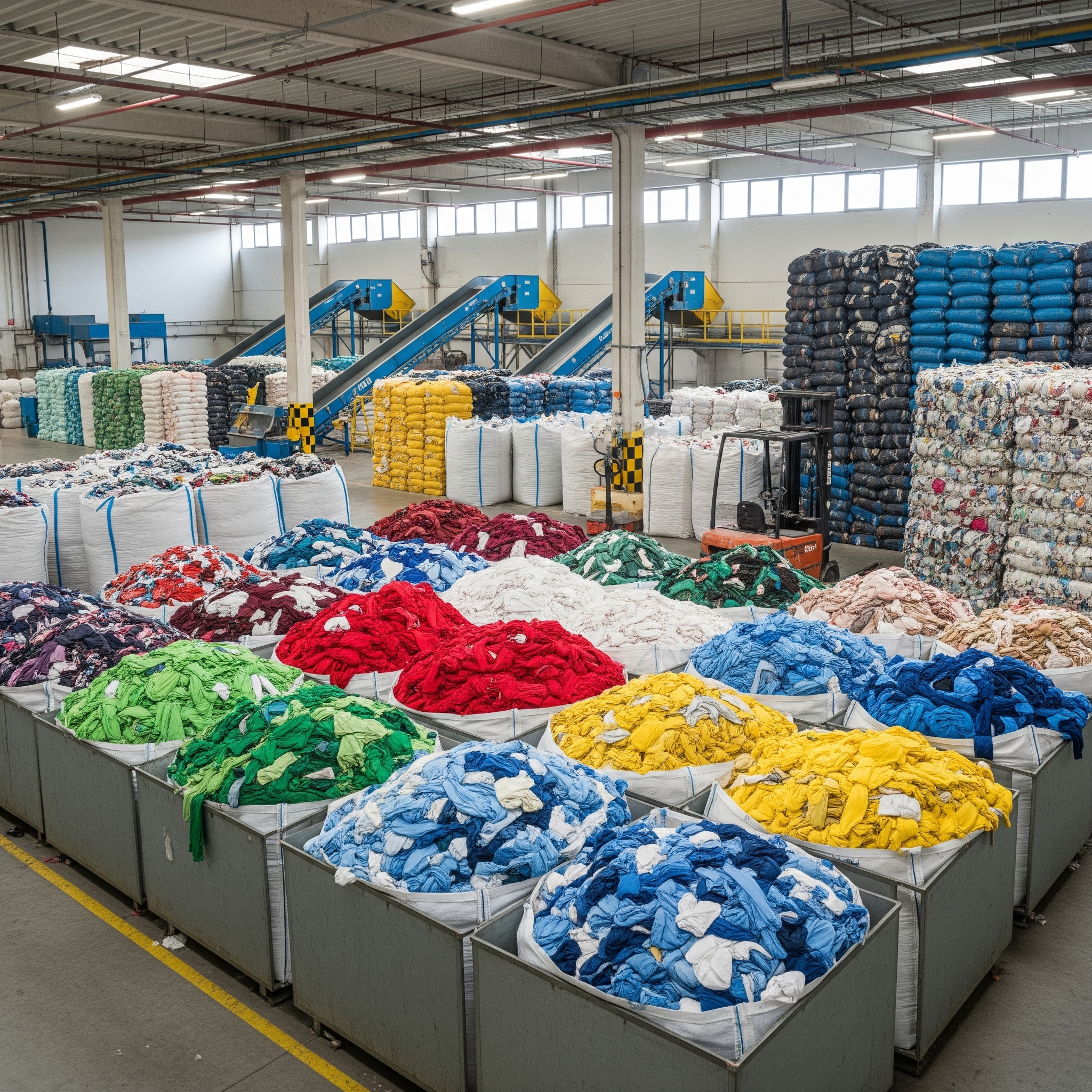
A typical waterproof jacket reaches the end of its life as a problem for recyclers. The face fabric is one polymer, the membrane another, the lining often a third, and all three are bonded together with an adhesive from a fourth chemical family. No amount of sorting or pre-processing can separate them again.
Add the trims (zips, threads, poppers, cord locks), each made from yet more materials, and a garment designed to perform for years becomes something very few recycling processes can accept.
Then there is the waterproofing itself. For decades, the industry has relied on fluorinated chemistry, or PFAS, for durable water protection. That chemistry is now under regulatory restriction because of its persistence in the environment and its associated health concerns.
Each of these choices is made long before a garment is sold. By the time it reaches a sorting line, its recyclability has already been decided.
One polymer family, from membrane to adhesive
Amphitex™ is our PFAS-free, solvent-free waterproof breathable membrane, made from polyolefins. Polyolefins are inherently hydrophobic, so the membrane repels water as a property of the material itself rather than through an applied coating. Its microporous structure blocks liquid water while allowing water vapour to escape.
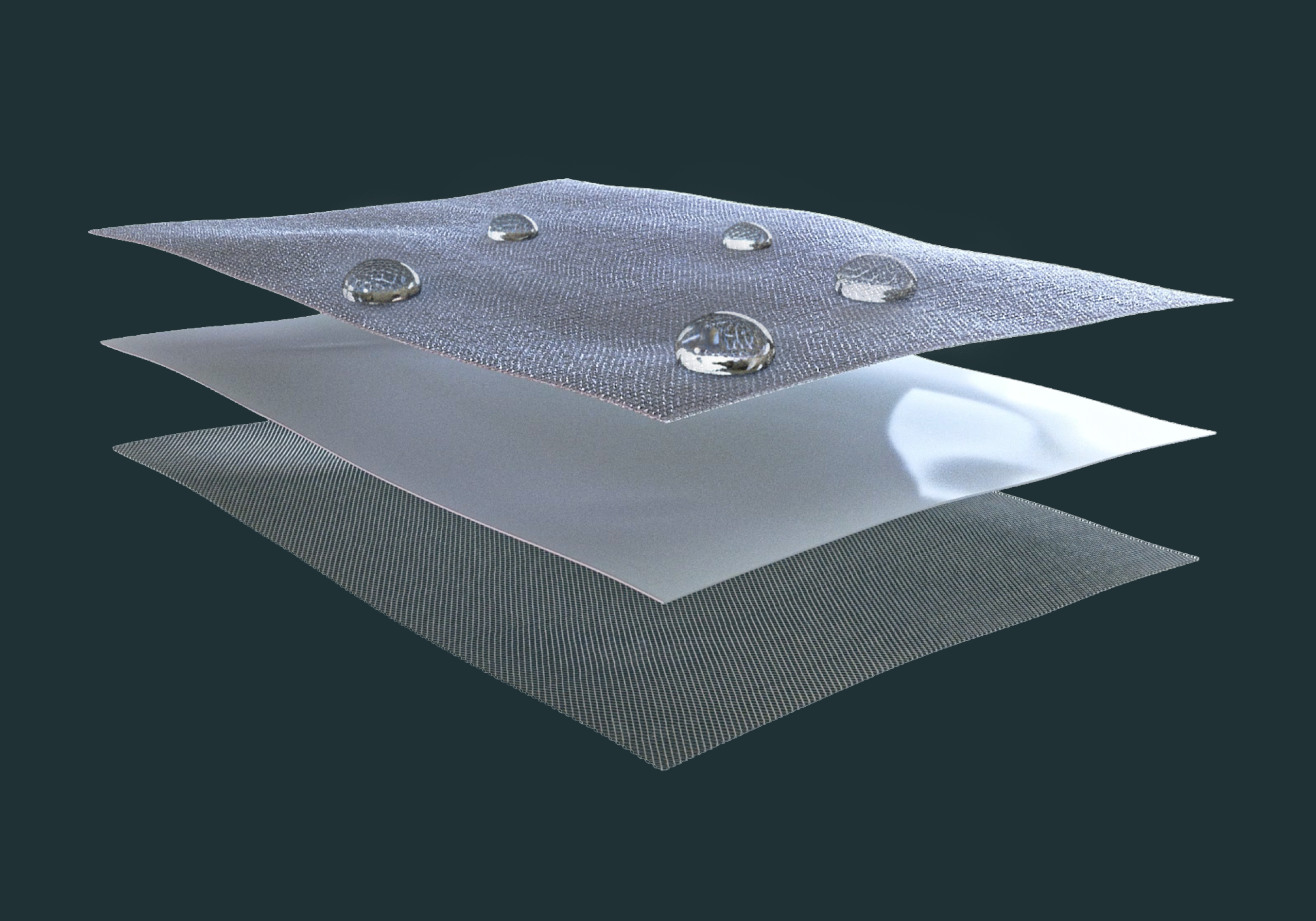
The step that makes mono-material construction possible is the adhesive. Polyolefin surfaces are difficult to bond, and the conventional adhesives we tested could not achieve adequate strength. Working with a lamination partner, we use a polyolefin-based adhesive, which means the membrane and the adhesive that holds it in place belong to the same polymer family. Laminated to a polypropylene face fabric, the entire laminate becomes mono-material.
Just as importantly, it works with the equipment mills already have. Amphitex™ laminates run on existing hot-melt lines, in 2-layer and 3-layer constructions, at widths of up to 1.5 metres. Laminators do not need to re-equip to adopt it, and for brands whose material strategy calls for it, Amphitex™ can also be integrated into conventional laminate systems.
Performance comes first
A laminate that is easier to recycle is only a sea change if it holds up in the rain. The most circular jacket is still the one that stays in use, so durability comes first. Amphitex™ BALANCE is tested against the same international standards used for conventional membranes:
- Waterproofness: 18,000–24,000 mmH₂O (JIS L1092 B)
- Breathability: 13,000 (A-1) to 14,426 (B-1) g/m²/24hr (JIS L1099)
- Wash durability: minimal drop in performance after 20 washes at 40°C
It is also soft and quiet in use, without the stiffness or crinkle often associated with waterproof membranes. Amphitex™ BALANCE is available now as 2L and 3L laminates, suited to commuter shells, urban technical apparel and everyday outerwear: packable protection for cyclists, and comfortable, breathable jackets for a full day in the city.
Recycling: where we are
We want to be precise about what a mono-material laminate does and does not achieve today.
What we have done: At lab scale, the Amphitex™ membrane has been chemically recovered into hydrocarbon feedstock, in collaboration with the University of Surrey and the University of Leeds, we have demonstrated durability through washing, thanks for funding from the Henry Royce Institute.
What is possible today: A polyolefin mono-material laminate can enter chemical or thermomechanical recycling streams, where those streams exist.
What is still to solve: A garment is only as recyclable as its least compatible component, so trims, zips and threads need to be able to follow the same route. Textile waste collection also remains a significant gap across the industry.
A mono-material laminate does not make a garment recyclable on its own. What it does is remove one of the most fundamental barriers, at the point where the decision is actually made.
The roadmap to recyclability
No single company can close this loop. Each part of the value chain has a role to play:
- Brands: specify mono-material now, so recyclable laminates exist in volume when recovery infrastructure catches up.
- Laminators: qualify polyolefin adhesive chemistry on existing lines.
- Recyclers: recover post-consumer laminates in a commercial stream.
- Investors: fund recycling validation at scale.
The decisions that determine whether today's outerwear can be recycled are being made in development meetings and tech packs right now. Specifying a laminate without PFAS, without toxic solvents and built from a single polymer family is one of the most direct ways to make those decisions count.
If you are developing outerwear for upcoming seasons and would like to handle samples or discuss Amphitex™ BALANCE for a collection, get in touch with our team.