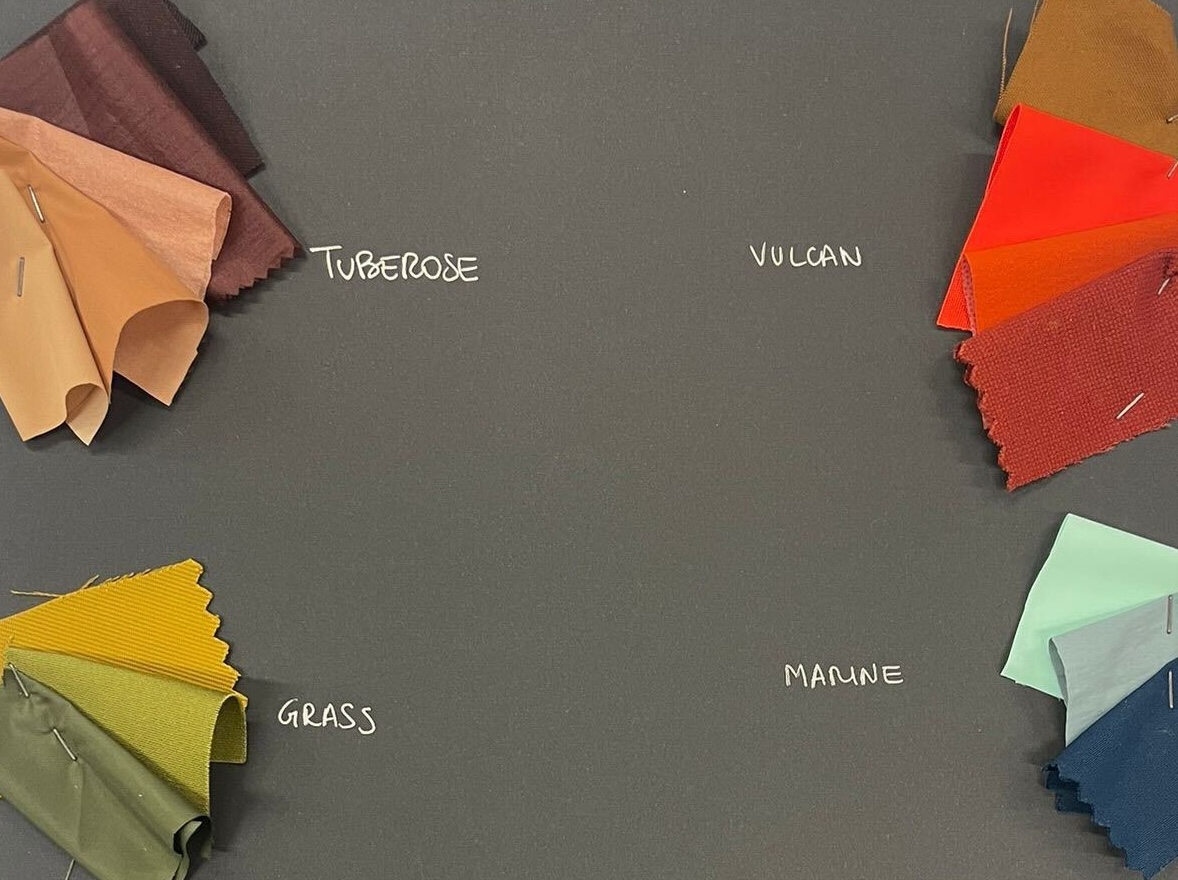
Performance Days has released its spring/summer 2028 colour forecast, developed with Munich-based trend forecaster Nora Kühner and an international team of designers. The season is titled Break Up, and it runs across seven colour stories and 43 hues.
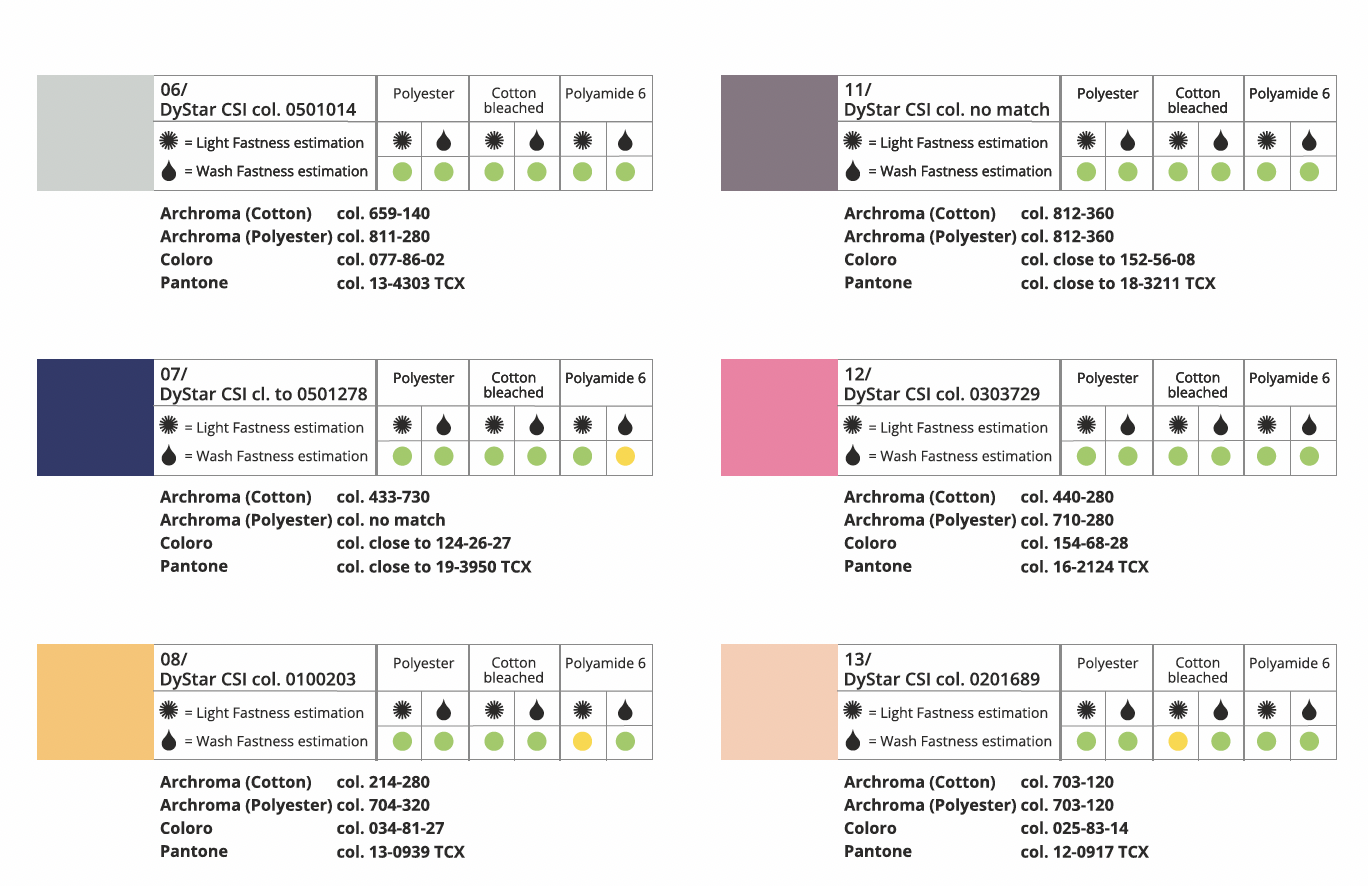
This forecast, designed for performance textiles, cross-references every hue to Archroma, Coloro, DyStar CSI and Pantone formulas, and each carries light and wash fastness estimations across polyester, bleached cotton and nylon. It tells you not only which colours matter next season, but roughly what it will take to achieve them.
The distance between a swatch and a shade
Anyone who has taken a colour card into development knows there is a gap between choosing a shade and achieving it. In conversations with mills and weavers, we frequently hear how matching a forecast is one of the lengthiest and priciest aspects of textile development. Lab dips, strike-offs, adjustments, resubmissions, and often a good deal of quiet trial and error before a mill and a design team agree they have arrived.
This points at a question worth asking earlier in the process: not how do we dye this colour, but whether the colour needs to be dyed at all.
What the card looks like from a loom
Amphicolor is a predictive colour intelligence platform. It creates colour in woven fabric through construction rather than through conventional wet dyeing or additional chemistry.
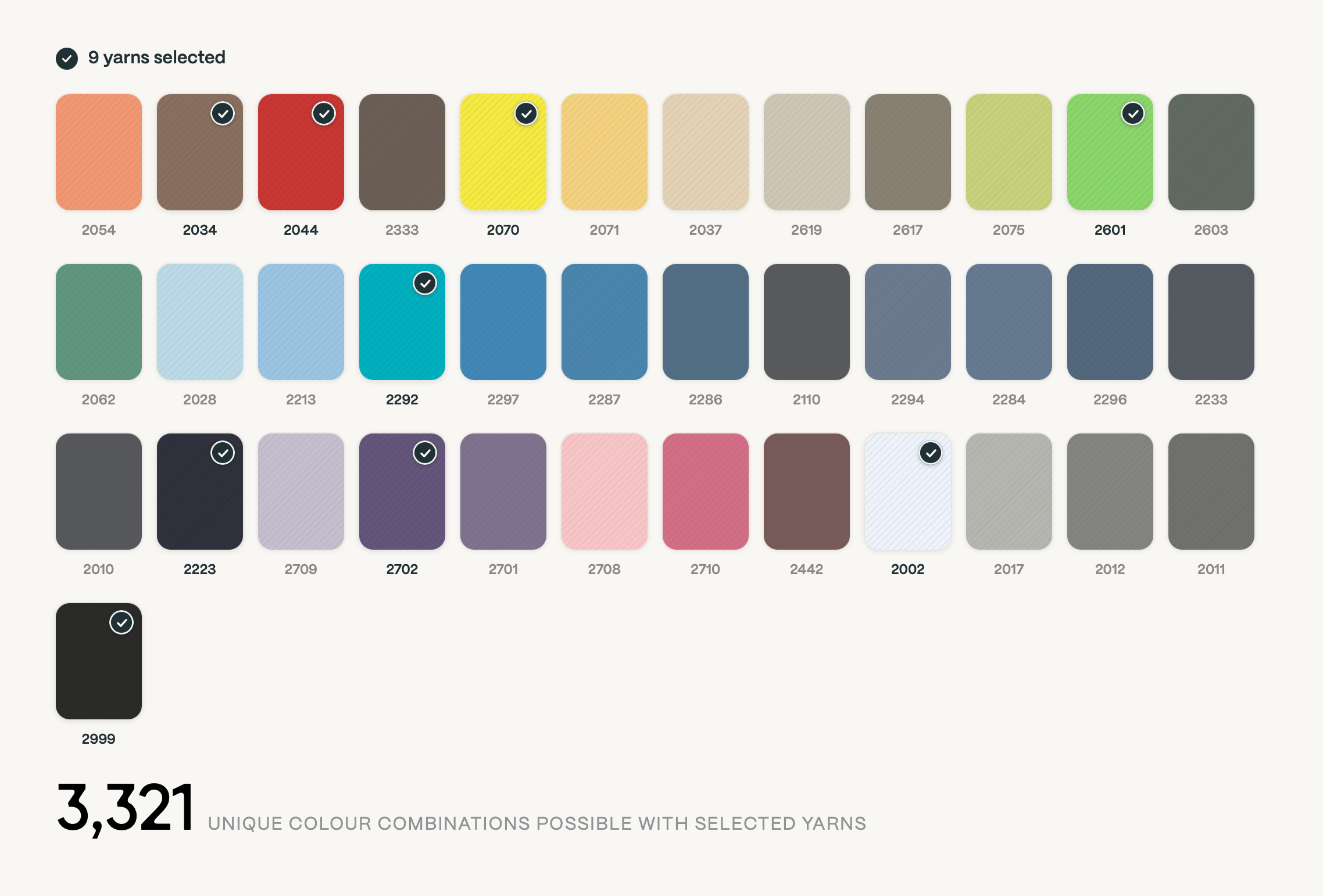
We work with weavers by digitising their existing solution-dyed yarn inventory. Our model then uses physical colour measurement, machine learning and digital simulation to identify the weaving recipe, the precise sequence of available yarn colours, predicted to achieve the closest match to a requested target, such as a Pantone reference or physical swatch.
The result is measured and simulated digitally, and validated against physical colour measurement, before a metre of fabric is committed to the loom.
The inventory is already on the shelf
The practical consequence for a mill is the part we find most interesting. A weaver holding a modest set of solution-dyed base yarns is, in effect, already holding most of an SS28 palette. It has simply not been woven yet. Rather than sourcing a new dyed yarn for each target shade, or committing to the minimum order quantities that solution-dyed yarn usually demands, the same small base set can be recombined into a very large number of distinct fabric colours.
This approach changes three things:
- It removes water from the colouration stage.
- It lowers the minimum quantity needed to access a specific shade.
- And it compresses the sampling loop, because most of the iteration happens digitally rather than in physical strike-offs.
Bring us a colour
We are at Performance Days Munich on 13 and 14 October, booth IN10.
If you are working the SS28 palette and there is a shade you are chasing, particularly one the fastness guide has flagged as difficult, bring it to the booth. We will talk through how it would be built rather than dyed, what it would take to get there in your existing yarn inventory, and where the honest limits sit.
A colour card is a good place to start a conversation. We would like to start a few.
Get in touch with us ahead of the fair at hello@amphico.uk